

Philippines staffing blog
Set a Call Recording Consent Boundary
Recording can improve quality and create legal risk. Define who is recorded, why, where the notice appears, and how long it is kept.
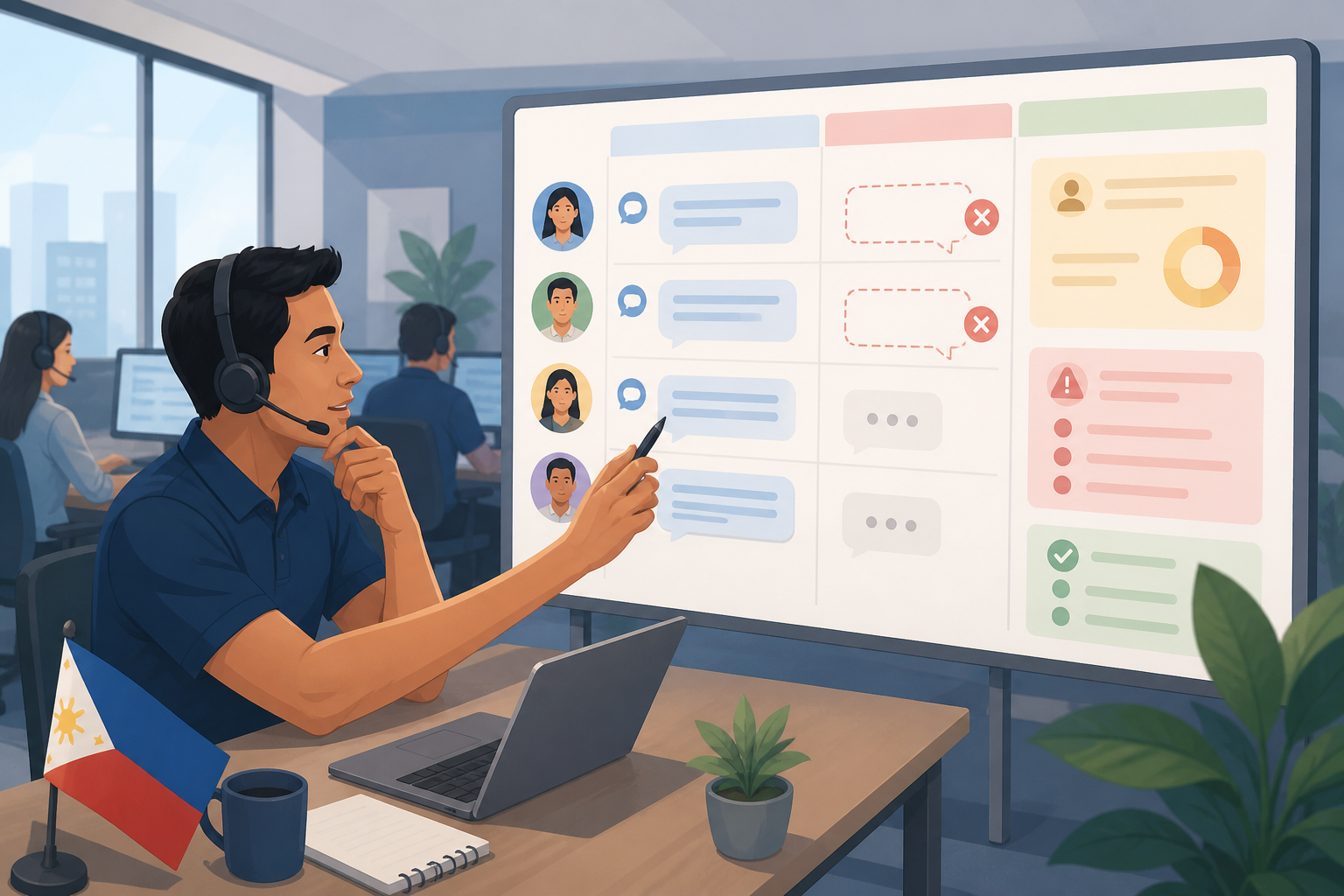
Direct answer
What outbound call center outsourcing means
Call recording needs a documented purpose, a jurisdiction-aware notice, a retention rule, and a clear answer for what happens when a person objects. The caller should not decide consent law on a live call. The business should give a script and a stop path.
What to get right first
- State the purpose of recording and the retention period before the first call.
- Use a jurisdiction-aware notice and a stop path when a person objects.
- Restrict access to recordings and log every export.
- Do not use a recording for a new purpose without a fresh review.
Control map
Split caller work from owner decisions
Swipe or scroll sideways to see every scorecard column.
| Call lane | Filipino caller | Owner or manager | Useful check |
|---|---|---|---|
| Recording notice | Plays the approved notice before personal detail. | Owns the jurisdiction matrix and script. | Notice is audible and logged. |
| Objection | Stops recording or transfers per policy. | Defines the stop path and exception. | Objection and action are recorded. |
| Access | Uses named access for an approved purpose. | Approves access and reviews exports. | Every export has a reason and owner. |
| Retention | Flags recordings due for deletion. | Confirms deletion or legal hold. | Deletion is verified and recorded. |
Example pilot board
Small numbers make the first review easier
Define the purpose and the scope
Recording should serve a named purpose such as quality review, dispute resolution, or training. Write the purpose down and limit access to the people who need it. A general archive of every call with no review owner is a liability, not a quality system.
Decide which calls are recorded. A sales call, a service call, and a payment call may have different rules. If the business records only some campaigns, make that visible in the dialer and the script. Do not let a caller improvise a recording decision based on the customer's tone.
Give the notice before the conversation
Place the notice at the start of the call, before any personal or account detail is discussed. The language should be clear, audible, and consistent with the jurisdiction. If the notice depends on the caller's location or the customer's location, the dialer should select the right version rather than relying on memory.
Provide a stop path. If the person objects, the caller should follow the approved process: stop recording, transfer to a non-recorded line, or end the call as the policy requires. Record the objection and the action. Do not continue recording while telling the person it is off.
Protect the recording
Store recordings in the approved system with named access and a retention period. Do not download files to a laptop or share them in chat. If a recording is needed for review, use a controlled link with an expiry. Log every export and the reason.
Recordings can contain payment data, health information, or personal disclosures. Minimize what is captured and redact where required. If a recording contains sensitive data that is not needed, follow the incident path rather than copying it into a training folder.
Review and delete
Sample recordings for quality and for adherence to the notice. Check that the notice played, that the caller did not discuss protected data before it, and that objections were honored. Review access logs for unusual exports or downloads.
Delete recordings at the end of the retention period unless a legal hold applies. Confirm the deletion and keep a record of the rule. A retention policy that exists only on paper will not survive an audit or a breach.
Copy-ready words
Scripts your caller can adapt
"This call may be recorded for quality and training. If you prefer not to be recorded, tell me now and I will follow our process."
"Thank you for telling me. I am stopping the recording now and will continue through the approved non-recorded path."
Review flow
Move from one clean list to steady calls
Swipe or scroll sideways to see all five review steps.
- 1
Select the notice
Use the jurisdiction and campaign rule.
- 2
Play before detail
Confirm the notice is audible.
- 3
Handle objection
Stop or transfer per policy.
- 4
Store and review
Restrict access and honor retention.
Retention in practice
Retention rules fail when no one owns the deletion. Assign a named owner and a monthly check. List the recordings due for deletion, confirm that no legal hold applies, and delete them from the primary system and the backup path. Record the count and the date. A policy that says recordings are kept for ninety days is not a control if the archive still contains year-old files.
Review the access list at the same time. A manager who changed teams may still have access to recordings they no longer need. Remove the access and verify it. If a recording is needed for a longer period because of a dispute, document the reason and the new expiry. Do not extend retention by leaving the file in a shared folder.
Training without recordings
Not every recording can be used for training. A call with sensitive data, a dispute, or a customer who objected should not become a general example. Build a small library of approved training clips with the customer data removed and the purpose documented. Review the library before each onboarding cycle.
If the business cannot use recordings for training, use role-play and written examples. Do not fall back to sharing raw files in chat. The same privacy and retention rules apply to a training clip as to the original call.
Buyer questions
Outbound calling FAQ
Can a caller decide whether to record?
No. The business defines the campaign, jurisdiction, notice, and stop path. The caller follows it.
What if the customer objects?
Follow the approved stop path and record the objection. Do not keep recording while claiming it is off.
Who can listen to a recording?
Only named users with an approved purpose. Exports should be logged and time-limited.
Numbered sources
These primary pages support the dated figures, exact quote, calling rules, and Philippines context used in this guide. A qualified adviser should apply the rules to your list, call type, and contact locations.