

Generate a sales handoff
Compare lead qualification and appointment setting when the intended result is fit evidence or a prepared meeting.
Calling service directory
Compare operations built around a clear queue, controlled conversation, useful record, and accepted handoff.
Compare the services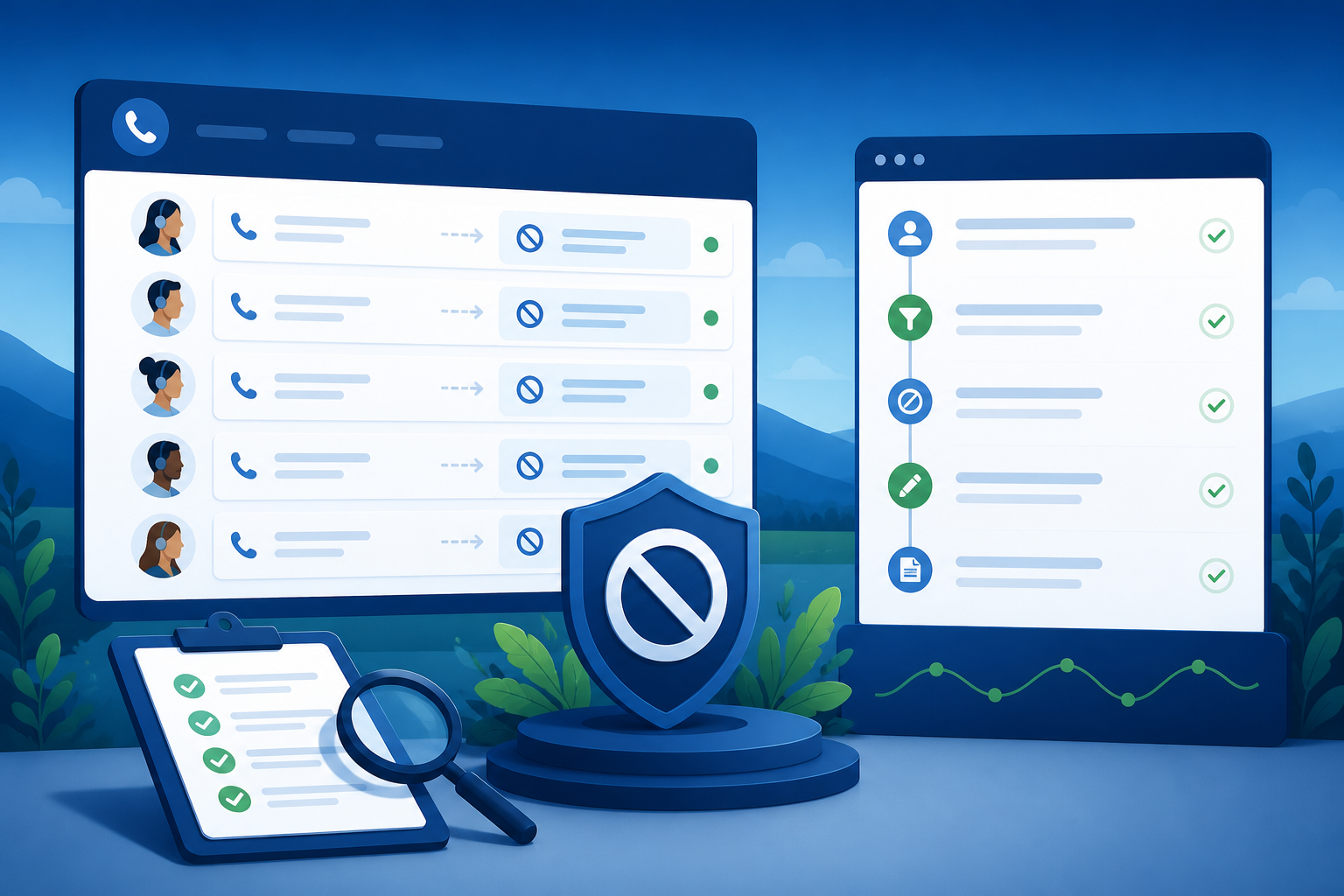
Service overview
Outsourced calling is most useful when the caller receives a released record, current words, limited authority, and a destination for exceptions. The output is not simply a call. It is a verified outcome, a readable note, a respected preference, or a handoff another owner accepts.
These service guides show what each lane can cover, what your team must provide, and which decisions should remain internal.
Service directory
Turn an approved prospect list into consistent fit notes and accountable sales handoffs.
View scope and controlsAnswer defined inbound queues, capture complete context, and route each caller to an accountable owner.
View scope and controlsBook qualified conversations with clear purpose, attendee context, and calendar ownership.
View scope and controlsMove approved customer commitments toward a documented answer, next action, or respectful close.
View scope and controlsConfirm event interest and registration details without losing attendee choices or exception ownership.
View scope and controlsCollect responses with neutral wording, honest refusal records, and a reviewable sample process.
View scope and controlsContact eligible former customers with controlled offers, suppression checks, and clear return signals.
View scope and controlsRemind customers about upcoming renewals while keeping account and payment decisions with authorized owners.
View scope and controlsConfirm essential order details and route discrepancies before fulfillment decisions are made.
View scope and controlsVerify selected record fields with a minimal access model and an accountable correction path.
View scope and controlsProtect unanswered call coverage with structured messages, controlled transfers, and urgent fallback routes.
View scope and controlsReview calls, notes, outcomes, and handoffs against an approved scorecard and correction loop.
View scope and controlsDecision guidance
Compare lead qualification and appointment setting when the intended result is fit evidence or a prepared meeting.
Use inbound handling, reception overflow, or follow up when the result is a resolved routine request or an owned message.
Order confirmation, renewal reminders, and database verification begin with an existing source record and narrow authority.
Event registration, survey calling, and win back support require a released audience, honest denominator, and clear exit states.
Call quality review compares the conversation, record, outcome, and handoff against one approved standard.
Shared workflow
Name the audience, purpose, source of truth, permitted words, outcomes, and decisions that remain internal.
Give the caller a clean queue, current script, minimum access, examples, and an available escalation owner.
Sample calls beside saved records, reconcile exceptions, and change instructions when evidence shows a repeated gap.
Good candidates
Boundaries
Frequently asked questions
Start with one queue that has a clear purpose, a reliable source list, stable instructions, and a named owner for exceptions. Choose the service page that most closely matches its desired outcome.
Prepare the queue source, permitted audience, current script, system access, result labels, escalation map, and examples of acceptable and unacceptable work.
Sometimes, but each lane still needs separate priorities, scripts, outcomes, access, and review rules. Begin with a narrow workload and expand after quality is stable.
Sample conversations and compare them with notes, dispositions, customer preferences, next actions, and accepted handoffs. Volume alone does not show whether the operation worked.
Start with one queue
Bring the list source, purpose, script, tools, sample records, outcome labels, and owners. We will help frame the lane before matching support.
Discuss your calling operation