

Outsourced calling buyer guide
An after-hours playbook for inbound call overflow
Define what an after-hours caller may resolve, record, transfer, or defer when the usual business owner is unavailable.
Direct answer
How should an outsourced overflow caller handle calls after business hours?
Define calls arriving outside published staffed hours with approved reasons, transfer destinations, and message fields, keep the after-hours service owner who defines urgency, on-call coverage, and next-business-day commitments accountable, test the workflow with real examples, and judge the provider on after-hours calls reaching the correct approved outcome with complete messages and no unsupported promise. Expand only after the records, calls, notes, and handoffs agree.
What to get right first
- Scope calls arriving outside published staffed hours with approved reasons, transfer destinations, and message fields.
- Require business hours, holiday calendar, call reasons, safe identity fields, on-call roster, transfer rules, outage messages, and callback windows.
- Keep decisions with after-hours service owner who defines urgency, on-call coverage, and next-business-day commitments.
- Measure after-hours calls reaching the correct approved outcome with complete messages and no unsupported promise.
Control map
Split caller work from owner decisions
Swipe or scroll sideways to see every scorecard column.
| Call lane | Filipino caller | Owner or manager | Useful check |
|---|
Example pilot board
Small numbers make the first review easier
Frame this operating decision correctly
After-hours coverage has fewer available owners and fewer safe actions. The playbook must become narrower when the business closes. For this program, the working evidence includes local business hours, caller location, stated purpose, immediate safety concern, account sensitivity, on-call schedule, transfer availability, consent, and safe callback details. Write those items into the brief before records reach a caller. If one item is unavailable, name who will supply it and whether work may continue without it.
The buyer should test the policy against recognizable situations: a routine status request, a new sales inquiry, a locked-out user, a delivery delay, a cancellation request, a complaint, a misdirected call, and a claimed emergency. These are not edge cases to hide until launch. They reveal whether the instruction gives the caller a safe action, a clear stop, and a named person who can decide.
Build the workflow in observable steps
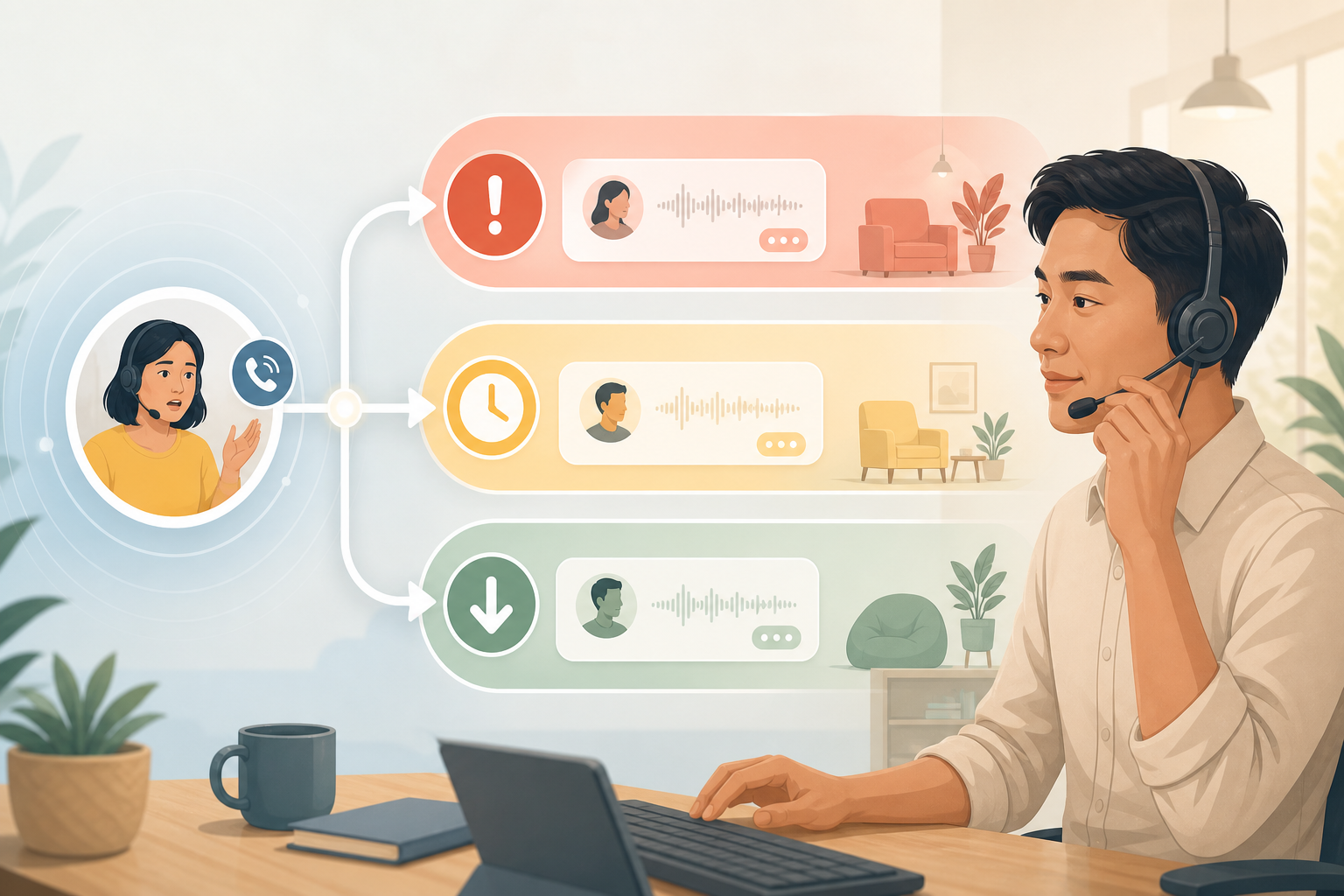
Use this sequence: identify the call lane; apply the approved identity boundary; test objective urgency criteria; attempt the named route; record the message; state the callback window; close or escalate. Give each transition a system field, timestamp, and owner. A reviewer should be able to reconstruct why the record moved without relying on memory or a private message.
The caller brief should use ordinary language and examples from this queue. Show which source controls, which statement may be made, which details belong in the note, and what must never be decided during the conversation. Practice both a normal case and a case that stops.
Review records as connected evidence
During quality review, sample the audio and message together, then verify the urgency reason, contact details, destination, transfer result, promise language, and next owner. Looking at only the audio or only the CRM row misses the handoff between them. The important question is whether the next owner received an accurate, usable account of what happened.
Review early work frequently enough to correct the instruction before a pattern spreads. Classify defects by cause: source data, unclear rule, tool behavior, caller execution, unavailable owner, or reporting logic. Different causes require different repairs, even when the final disposition looks the same.
Decide whether the lane is ready to expand
The expansion rule is specific: retain a call lane after hours only when its owner can support the promised response and the caller can complete it without excess data or improvised judgment. Record that decision beside the sample size, dates, assumptions, defect counts, unresolved exceptions, and owner approval. A verbal impression of quality is not a release gate.
If the evidence fails, keep the same article, workflow, and queue identity while correcting the defect. Do not make the report look better by deleting difficult cases or redefining the denominator after work begins. A smaller honest release gives the buyer more control than a large ambiguous one.
Copy-ready words
Scripts your caller can adapt
Review flow
Move from one clean list to steady calls
Swipe or scroll sideways to see all five review steps.
Give the outsourced caller a usable boundary
A caller can acknowledge a question, repeat an approved fact, capture the contact's words, and route the record. The caller should not fill a policy gap with confidence. The brief must show the exact phrase or action that pauses work and the route that resumes it.
Use named accounts and the smallest practical data view. Keep exports, deletion, administration, restricted fields, recordings, and bulk changes separate from ordinary call work. Access should match this lane and end when the assignment ends, even if the person continues on another client task.
Close the loop with the business owner
At the end of each review period, reconcile eligible records, attempts, contacts, outcomes, suppressions, owner decisions, corrections, and open work. Age unresolved items by their real deadline. Free-text notes should support this view, not replace it.
The client remains responsible for policy, claims, commercial decisions, sensitive account actions, and the authoritative systems. OutsourcedCallers.com can help scope and staff a Philippines-based calling desk around the approved workflow. The client should approve the final brief, access, examples, and escalation owners before release.
Use a topic-specific audit trail
local business hours, caller location, stated purpose, immediate safety concern, account sensitivity, on-call schedule, transfer availability, consent, and safe callback details. Keep this evidence together under the same queue identity so an owner can compare the instruction with the record that the caller actually received. The audit should also retain the difficult situations used during testing: a routine status request, a new sales inquiry, a locked-out user, a delivery delay, a cancellation request, a complaint, a misdirected call, and a claimed emergency.
identify the call lane; apply the approved identity boundary; test objective urgency criteria; attempt the named route; record the message; state the callback window; close or escalate. The reviewer then applies this exact check: sample the audio and message together, then verify the urgency reason, contact details, destination, transfer result, promise language, and next owner. The resulting release decision is equally specific: retain a call lane after hours only when its owner can support the promised response and the caller can complete it without excess data or improvised judgment. Preserve the decision and its evidence when the queue changes so later reviewers do not mistake a new operating condition for an already tested one.
Buyer questions
Outbound calling FAQ
Numbered sources
These primary pages support the dated figures, exact quote, calling rules, and Philippines context used in this guide. A qualified adviser should apply the rules to your list, call type, and contact locations.