

Philippines staffing blog
How to design overflow triggers for outsourced inbound call handling
Choose measurable queue conditions that activate controlled overflow without hiding staffing, routing, or handoff failures.
Direct answer
What outbound call center outsourcing means
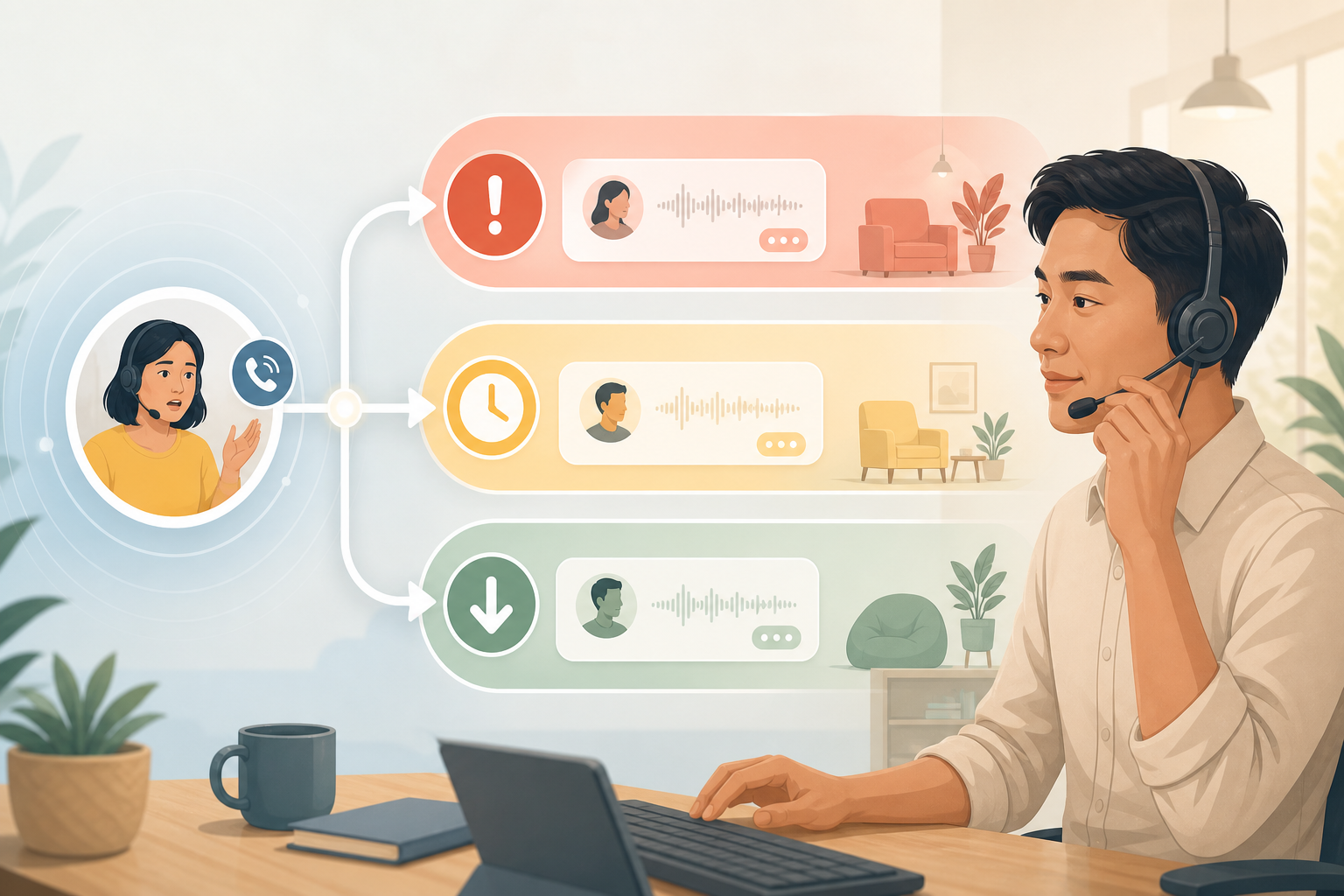
An overflow trigger should describe an observable queue condition, the calls allowed to move, and the point at which normal routing resumes. It should not be a vague instruction to send calls elsewhere whenever the front desk feels busy.
What to get right first
- Measure offered calls, oldest wait, available primary staff, and transfer failures separately; each signal describes a different problem.
- Release only call types the overflow caller is trained and authorized to handle, with a safe route for everything else.
- Pair every activation rule with a recovery rule so overflow does not remain active after the original pressure has passed.
- Review abandoned calls, incomplete messages, repeat contacts, and owner acknowledgments—not just the number answered.
Control map
Split caller work from owner decisions
Swipe or scroll sideways to see every scorecard column.
| Call lane | Filipino caller | Owner or manager | Useful check |
|---|---|---|---|
| Short demand spike | Answer approved call types and capture the normal record | Watch queue recovery and primary coverage | Wait and abandonment by interval |
| Primary destination unavailable | Use the approved fallback and state only verified availability | Correct routing or staffing failure | Acknowledged handoffs |
| Unsupported request | Capture minimum context and route without improvising | Accept and resolve the exception | Exceptions with named owners |
Example pilot board
Small numbers make the first review easier
Start with the customer experience the trigger must protect
Overflow exists to protect access when the normal inbound path cannot absorb demand. That purpose matters because an answered call is not automatically a successful call. If an overflow caller lacks the customer record, cannot reach the correct owner, or writes an unusable message, the business has moved the wait rather than solved it. Begin by naming the customer outcome: a caller reaches a trained person, receives an accurate statement about what can happen next, and leaves enough context for the responsible owner to act.
Write the scope by call lane. A general inquiry, appointment request, existing order question, urgent safety concern, and billing dispute do not carry the same permissions or routing needs. The overflow team may fully complete a narrow appointment request while only recording and escalating a billing dispute. This distinction prevents a high answer rate from concealing unsupported promises or exposure of information the overflow caller should not access.
The role brief should identify the ordinary destination, fallback owner, required fields, prohibited claims, identity steps, hours, languages, and maximum callback statement for each released lane. If those facts cannot be written, the lane is not ready for overflow. Keep it on the primary route until its owner defines a safe handoff.
Use paired signals instead of a single magic number
A single queue threshold can activate for the wrong reason. Three waiting calls may be serious when one receptionist is handling a long urgent conversation, but harmless when two trained people become available seconds later. Pair a demand signal—such as oldest wait, calls offered within an interval, or abandonment trend—with a capacity signal such as no eligible primary agent, extended handling time, or a failed destination. The pair explains both pressure and the primary path’s ability to respond.
Choose the interval carefully. A one-minute window may react to random bunching; an hourly average can hide a damaging ten-minute surge. Test candidate rules against historical arrival and handling data, then replay specific days with launches, outages, holidays, and staff meetings. The goal is not to eliminate every wait. It is to identify the point where delay or abandonment becomes less acceptable than the controlled limitations of overflow.
Keep technical failure separate from volume. An invalid extension, rejected transfer, carrier problem, or unavailable application needs an incident route even when the queue is quiet. If technical failures are counted as ordinary overflow, reports may suggest insufficient staffing when the real correction belongs to telephony, routing data, or system access.
Define activation, throttling, and recovery as one control
An activation rule without a recovery rule can strand calls in overflow all day. State who or what activates the route, which call lanes move, how much capacity is released, and how operators can see the current state. Then define recovery: for example, the primary queue must remain below the target wait with eligible staff available for several consecutive intervals. Consecutive healthy intervals reduce rapid switching that confuses callers and staff.
Use throttling when a full transfer would create a second queue that the overflow team also cannot handle. The router might release only selected call types or a bounded share of new calls, while preserving urgent and owner-specific calls for the primary team. The precise percentage is an operating choice based on measured capacity, not a universal benchmark. Record every manual override with its reason and owner so an emergency action does not quietly become the standard configuration.
Recovery includes reconciliation. Confirm that messages captured during overflow reached the intended owner, promised callbacks entered the right queue, temporary access was removed when applicable, and callers were not duplicated across primary and overflow records. Only then should the incident be treated as closed.
Measure whether overflow preserved the work
Track answer and abandonment rates, but connect them to record quality. Sample whether the note identifies the caller, purpose, affected account or service, safe contact method, urgency facts, stated availability, destination, and next owner. Check that consent and contact-preference changes reached the authoritative system. A short call with missing context can create more customer effort than a slightly longer wait.
Review repeat contact within a useful window. A caller may ring again because the line dropped, because the promised callback never occurred, or because the first message did not capture the request. Those causes need different corrections. Reconcile the telephony event, overflow note, owner acknowledgment, downstream action, and later contact instead of labelling every repeat as new demand.
A weekly review should ask which triggers fired, whether the activation cause was correctly classified, which lanes produced the most exceptions, and whether primary capacity or routing needs a permanent change. Overflow is a resilience control, not a substitute for fixing recurring understaffing, broken destinations, or unclear ownership.
Run a tabletop exercise before launch. Use a sudden ten-minute spike, an invalid primary extension, an urgent call outside the overflow lane, and a callback owner who does not acknowledge the message. Follow each event from router to final action and record where evidence disappears. The exercise should test what the caller sees, what the primary team sees, and how a manager disables the route safely. Correct the workflow before live callers discover those gaps.
Document customer-facing continuity when overflow ends during an active interaction. A caller already speaking with the overflow team should normally finish the approved task rather than being transferred back solely because the queue recovered. New calls can return to the primary path while accepted handoffs remain with their recorded owners. This prevents route changes from creating duplicate notes, repeated identity checks, or a conversation that neither team believes it owns.
Copy-ready words
Scripts your caller can adapt
"You have reached the support team covering this line. I can record the reason for your call and follow the approved route. I will not guess about an account or promise a response time that has not been confirmed."
"This needs the responsible team to review it. I will capture the details they require and route the message. If there is an immediate safety risk, please use the emergency channel your organization provides."
Review flow
Move from one clean list to steady calls
Swipe or scroll sideways to see all five review steps.
- 1
Observe
Read demand and eligible-capacity signals for the defined interval.
- 2
Activate
Release only approved lanes and record the trigger state.
- 3
Handle
Use lane-specific identity, note, and escalation rules.
- 4
Recover
Return routing after consecutive healthy intervals.
- 5
Reconcile
Verify owner acceptance and every temporary record.
Buyer questions
Outbound calling FAQ
Should overflow start after a fixed number of rings?
A ring threshold can be one input, but it does not show queue demand, staff eligibility, or whether the destination failed. Pair it with another observable condition and test it against real call patterns.
Can an overflow caller handle every inbound request?
Only if every lane has appropriate training, access, identity checks, and decision authority. Most programs should define complete, message-only, and prohibited lanes separately.
Numbered sources
These primary pages support the dated figures, exact quote, calling rules, and Philippines context used in this guide. A qualified adviser should apply the rules to your list, call type, and contact locations.