

Philippines staffing blog
A Warm Transfer Checklist With Real Acceptance
A transfer is complete when the receiving owner accepts the call and the context. A handoff message is not acceptance.
Direct answer
What outbound call center outsourcing means
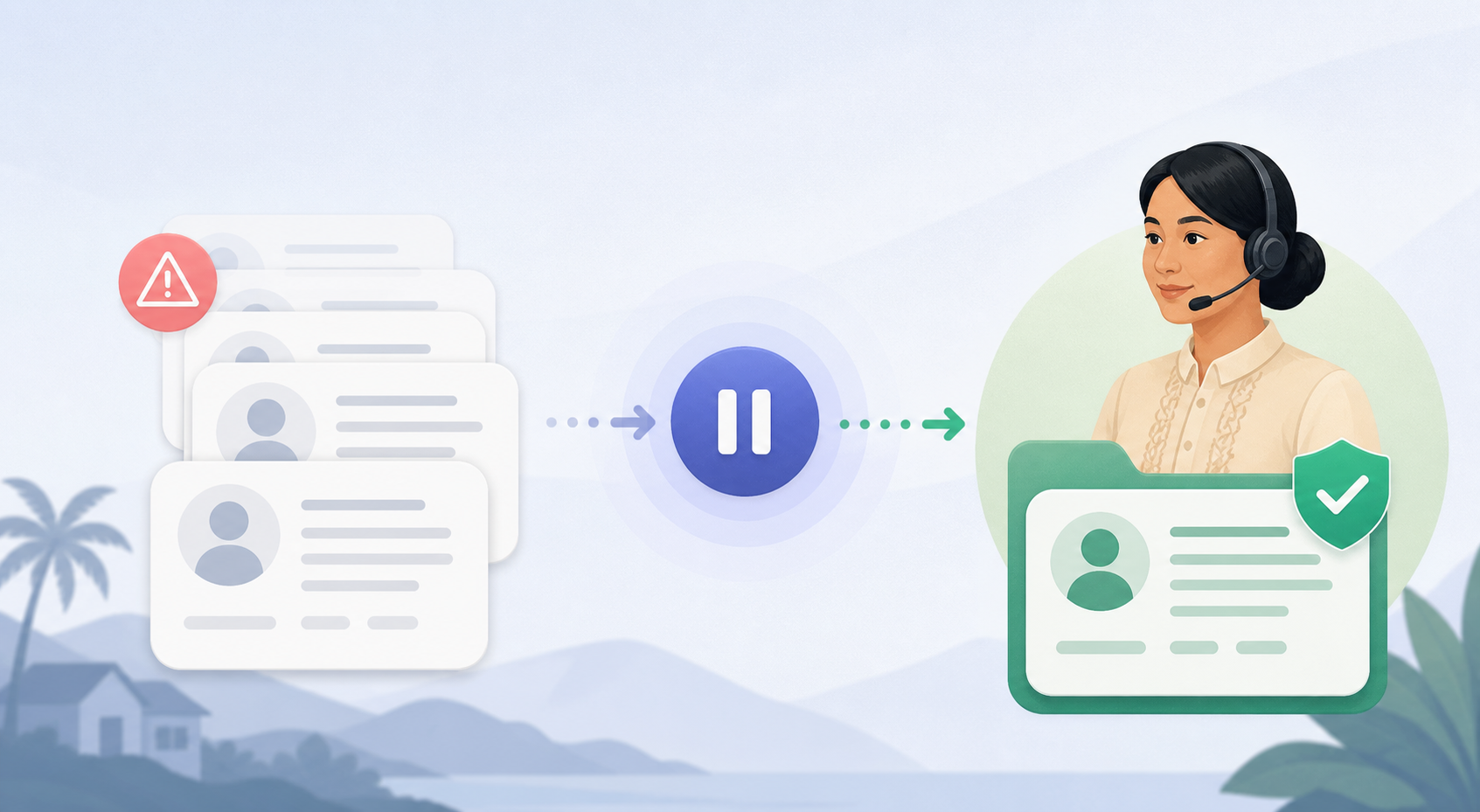
Warm transfers fail when the caller drops the context, the receiving team is not ready, or the customer is told a transfer happened before anyone accepts. The checklist should make custody visible at each step.
What to get right first
- State the customer, the reason, the verified facts, and the requested action before the transfer.
- Require a named receiving owner to accept custody.
- Stay on the line until acceptance or follow the approved callback path.
- Record the acceptance time and the destination reference.
Control map
Split caller work from owner decisions
Swipe or scroll sideways to see every scorecard column.
| Call lane | Filipino caller | Owner or manager | Useful check |
|---|---|---|---|
| Brief | Prepares the customer, reason, facts, and requested action. | Defines what the destination needs. | Brief is complete before dialing. |
| Contact | Reaches a named receiving owner. | Accepts or rejects with a reason. | Acceptance is recorded with time. |
| Handoff | Stays until acceptance or follows callback path. | Takes custody of the customer. | Customer is not told success before acceptance. |
| Review | Samples context and repeat contacts. | Repairs routing and brief quality. | Rejects and repeats have owners. |
Example pilot board
Small numbers make the first review easier
Prepare the handoff before dialing
Write a short transfer brief: who the customer is, what they need, what has been verified, what has been promised, and what the receiving team must decide. Include the customer's time zone and the best callback number. If the receiving team needs a document, confirm that it is attached or linked before the transfer.
Do not transfer a customer into a queue that cannot see the context. If the destination is a general line, the brief should say what the receiving agent should do first. A warm transfer is a relay, not a throw.
Get acceptance from a person
The receiving owner should acknowledge the call and the context. A voicemail, an auto-attendant, or a ticket assignment is not acceptance. If the owner is unavailable, the caller follows the approved path: schedule a callback, leave a structured message, or return the customer to the original owner.
Record the receiving person's name or identifier and the time of acceptance. If the call is recorded, note the segment. If the receiving team rejects the transfer, record the reason and the next owner. Do not tell the customer the transfer succeeded until acceptance is confirmed.
Protect the customer during the handoff
Explain what will happen before placing the customer on hold. Give a realistic wait or a callback option. If the hold exceeds the approved limit, return to the customer with an update rather than leaving them in silence.
Do not repeat sensitive information to every new person who answers. Use the minimum necessary context and the approved reference. If the customer asks not to repeat a detail, respect that and route the protected information through the approved channel.
Review transfer outcomes
Sample transfers and check whether the context arrived, the receiving owner accepted, and the customer avoided repeating the same information. Track rejects, drop-offs, and repeat calls. A high transfer count is not a quality measure if customers are bounced between teams.
When a destination repeatedly rejects transfers, repair the routing or the brief rather than blaming the caller. The transfer path is a shared control owned by both teams.
Copy-ready words
Scripts your caller can adapt
"I have [customer] on the line about [reason]. I verified [facts] and they need [action]. Can you take the call now? I will stay until you confirm."
"I am connecting you with [team]. They have the context I just reviewed. If the wait is longer than expected, I will come back with an update."
Review flow
Move from one clean list to steady calls
Swipe or scroll sideways to see all five review steps.
- 1
Prepare
Write the brief and confirm the destination.
- 2
Contact
Reach a named owner and state the request.
- 3
Accept
Record acceptance and hand over custody.
- 4
Review
Check context, rejects, and repeats.
When the destination is closed
If the receiving team is closed, do not transfer the customer into a voicemail and call it a warm handoff. Offer a scheduled callback with a named owner and a window, or return the customer to the original team if it can help. Record the closure and the alternative. The customer should not have to guess whether anyone received the call.
Check the holiday and after-hours coverage before the campaign starts. A destination that is open on paper may have no one available during a lunch break or a local holiday. Keep a backup owner for each critical destination. Test the backup path before a live transfer, not during one.
After the transfer
Check that the receiving owner actually completed the next action. A transfer can be accepted and then stall. The original caller may need to follow up if the customer's issue is time-sensitive. Record the follow-up owner and the date.
If the customer returns to the original queue, link the new contact to the transfer record. A repeat call is evidence that the handoff did not resolve the need. Review the case with both teams rather than assigning blame from one side.
Buyer questions
Outbound calling FAQ
Is a voicemail transfer a warm transfer?
No. If no person accepts, use the callback or message path and tell the customer what will happen.
What if the receiving team rejects the call?
Record the reason, keep custody, and route to the next approved owner or schedule a callback.
Should the caller stay on the line?
Stay until acceptance or until the approved handoff path is complete. Do not leave the customer in an unowned queue.
Numbered sources
These primary pages support the dated figures, exact quote, calling rules, and Philippines context used in this guide. A qualified adviser should apply the rules to your list, call type, and contact locations.