

Philippines staffing blog
Why win-back callers need an existing-case check
Prevent a reactivation pitch from colliding with an unresolved complaint, refund, service case, or suppression.
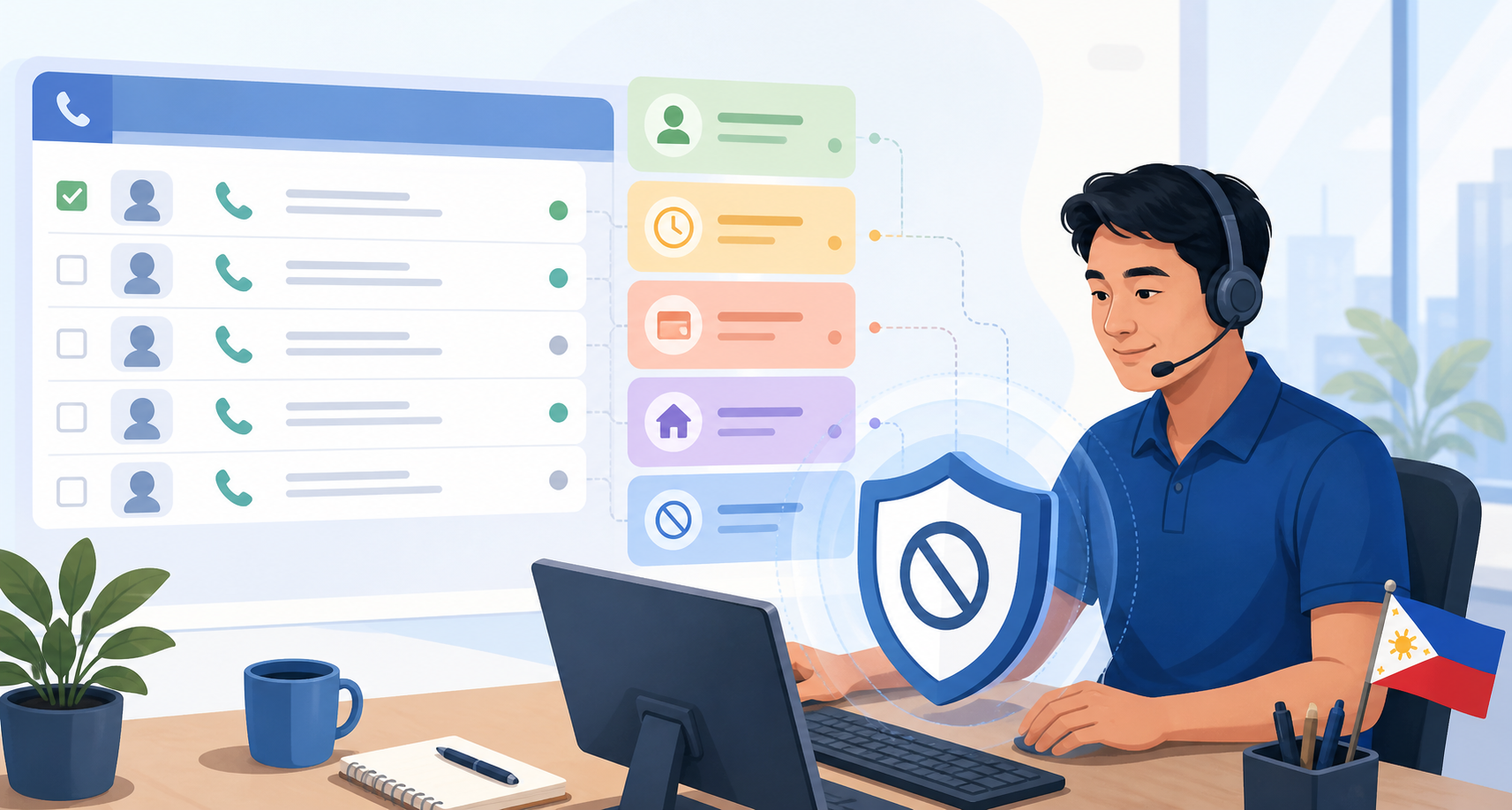
Direct answer
What outbound call center outsourcing means
An open-case check holds promotional outreach when unresolved service work, disputes, safety matters, or contact restrictions make a win-back call inappropriate.
What to get right first
- Check authoritative case and suppression systems immediately before release.
- Classify which open cases block, modify, or permit outreach.
- Do not ask the caller to solve specialist cases during a win-back pitch.
- Re-enter records only after a named owner supplies closure evidence.
Control map
Split caller work from owner decisions
Swipe or scroll sideways to see every scorecard column.
| Call lane | Filipino caller | Owner or manager | Useful check |
|---|---|---|---|
| Standard | Follow the approved evidence and action rule | Maintain authority and resolve exceptions | Accepted actions with complete evidence |
| Uncertain | Preserve facts and use the hold route | Decide from authoritative sources | Uncertainty resolved without unsupported changes |
| Exception | Stop at the written boundary and escalate | Accept, decide, and close the handoff | Exceptions with named closure evidence |
Example pilot board
Small numbers make the first review easier
Treat case status as release evidence
A former customer can appear eligible by inactivity date while still waiting for a refund, complaint response, replacement, data request, or service correction. A win-back pitch in that moment signals that acquisition activity outranks the unresolved commitment. The campaign should check case state as a release condition, not rely on a caller discovering the problem after opening.
Identify every authoritative source that can create a hold: customer service, billing disputes, returns, safety, privacy, legal, fraud, and communication preferences. A marketing CRM alone may not contain those states. The campaign owner should define a joined release view or a reliable pre-dial check with freshness and failure handling.
A system outage or stale synchronization must have a safe outcome. If blocking case status cannot be confirmed, hold affected records rather than assuming no case exists. Record the failed dependency so operations can distinguish unavailable evidence from true eligibility.
Classify cases by outreach effect
Not every case has the same effect. Create categories such as hard block, owner review, modified service-only contact, and permitted. A hard block might cover unresolved harm, formal disputes, active opt-outs, or legal restrictions. Owner review may cover old cases with unclear closure. The categories should be approved by the accountable teams.
Define scope. A case may block all outbound contact, only promotional contact, one product, or one person in a business account. The caller should see the allowed purpose without seeing restricted case detail. Avoid copying complaint narratives into the campaign list simply to explain a hold.
Use closure evidence, not a closed label alone. Confirm the final action, responsible owner, closure timestamp, customer communication when required, and whether a cooling-off or suppression period applies. Reopening a case should remove the record from unreleased and queued work quickly.
Route discoveries without turning the pitch into service work
Even a strong precheck will miss cases created moments earlier or stored outside connected systems. Give callers a stop phrase and a case-discovery disposition. They should acknowledge the customer, stop the offer, capture the minimum reference, and route to the service owner. They should not defend the prior outcome or improvise a remedy.
Protect promises. If the customer says someone promised a callback, record the wording and time and connect it to the existing case. Do not replace the promise with a new generic timeframe. The case owner decides whether the commitment is valid and how to recover it.
Respect the customer’s contact instruction during the interaction. A request not to receive promotional calls must reach the authoritative preference process, regardless of whether the service case remains open. Service follow-up and marketing permission are separate decisions.
Measure collisions and repair the source process
Track records blocked before dial, cases discovered on calls, stale closures, reopened cases, synchronization failures, and customer complaints about conflicting outreach. Segment by case system, category, campaign source, and time since case activity. Collision rate is a quality metric, not merely a lost-opportunity count.
Sample allowed records as well as blocked ones. Verify that the classifier did not let a serious case through or hold a harmless informational request indefinitely. Compare the release snapshot with the case state at actual attempt time because delays can invalidate earlier eligibility.
Define re-entry deliberately. The case owner or approved automation supplies closure evidence; the campaign recalculates eligibility; preferences and any waiting period are applied; and the record receives a new release timestamp. Do not simply remove the hold flag and restore an old call task.
Exercise the control with a pending refund, a resolved shipping question, a reopened complaint, a privacy request, a payment dispute, and an opt-out submitted during service contact. The team should identify source, block scope, permitted communication, owner, closure evidence, and whether the record can ever return to win-back outreach.
Copy-ready words
Scripts your caller can adapt
"This account has an open service matter, so I will not continue with a return offer. I am routing the record to the case owner and will preserve your contact preference."
Review flow
Move from one clean list to steady calls
Swipe or scroll sideways to see all five review steps.
- 1
Identify
Confirm the record, purpose, and current state.
- 2
Evidence
Capture attributable facts without unsupported inference.
- 3
Decide
Apply the approved rule or route to its owner.
- 4
Handoff
Transfer context, boundary, due time, and next action.
- 5
Reconcile
Verify closure in the authoritative system.
Keep incentives from weakening the hold
Win-back teams may be measured on contacts or reactivations, while service teams are measured on case closure. Those incentives can encourage premature closure or attempts around a hold. Give the campaign no credit for blocked records and review manual overrides independently. The person who benefits from release should not be the only person allowed to approve it.
Make override evidence specific. An owner should identify the case, why outreach is now appropriate, the permitted purpose, expiration of the override, and any required wording. A blanket instruction to call anyway is not sufficient. The system should expire temporary overrides so they cannot silently authorize later campaigns with a different offer or context.
Review customer outcomes after re-entry. A formally closed case may still leave dissatisfaction that makes a sales pitch inappropriate. The business can define a cooling-off period, service-recovery confirmation, or owner check based on its policy. The caller follows the resulting state and does not infer readiness merely because the technical block disappeared.
Coordinate offer expiry with case timing. A limited offer should not pressure a customer to abandon an unresolved remedy, and the caller should not suggest that accepting the offer settles a complaint unless an authorized written process says so. If the offer will expire before case review, route the timing conflict to the commercial and service owners. Preserve their decision and customer wording so later teams can distinguish a goodwill option from the underlying case resolution.
Include related-account logic. A complaint on one household member, business branch, or subscription may or may not block outreach to another. The client must define linkage, purpose, and privacy boundaries before the campaign joins those records. Callers should not infer that one person’s dispute applies to everyone, but they also should not ignore an obvious shared case merely because list rows use different identifiers.
Buyer questions
Outbound calling FAQ
Does every open case block a win-back call?
The business should define categories. Some informational cases may permit contact, while unresolved complaints, disputes, or safety issues commonly require a hold or different route.
Numbered sources
These primary pages support the dated figures, exact quote, calling rules, and Philippines context used in this guide. A qualified adviser should apply the rules to your list, call type, and contact locations.