

Philippines staffing research
Does permission for one follow-up channel carry to another?
A customer follow-up study for separating a request for help from permission to call, text, email, or leave a message on each available route.
Research question and evidence scope
A customer who asks for help has expressed a purpose, but not necessarily permission for every available channel. They may request an email receipt, accept a call at work, reject text messages, or permit voicemail only without account detail. Operational pressure can flatten those choices into “contact allowed,” especially when one channel fails. This research asks how a follow-up workflow can preserve channel-specific instructions, purpose, timing, and revocation before an outsourced caller switches routes.
Methodology. Follow a prospective cohort of customer requests that include at least one permitted return channel and a defined service purpose. Freeze channel codes, purpose codes, safe-message rules, source hierarchy, retry limits, stop handling, and owner escalation before collection. The observation unit is one request lineage: intake statement, recorded preference, channel attempts, delivery or connection evidence, customer correction, suppression event, owner acknowledgement, and final resolution at a declared cutoff. Reviewers first judge the evidence available before each attempt, not what later contact made convenient.
Model permission as a vector rather than a single flag. For voice, text, email, messaging platform, and voicemail, record allowed, declined, unknown, unavailable, or owner-review; then attach purpose, time window, destination, source, and recorded date. A phone number appearing in an account is not the same as a request to call it. Permission to discuss appointment logistics may not extend to marketing. A customer saying “send it to me” requires clarification when the channel is not already established by the released workflow.
Operating scenario and evidence
Create a source hierarchy with conflict rules. A fresh statement during an authenticated interaction may update an older general preference when client policy permits. A do-not-contact or channel stop should not be overwritten by a stale form default. A staff note such as “prefers phone” needs date, scope, and provenance before it defeats a later email-only request. When sources conflict, callers route the conflict or use the most restrictive released rule; they do not select whichever channel is fastest.
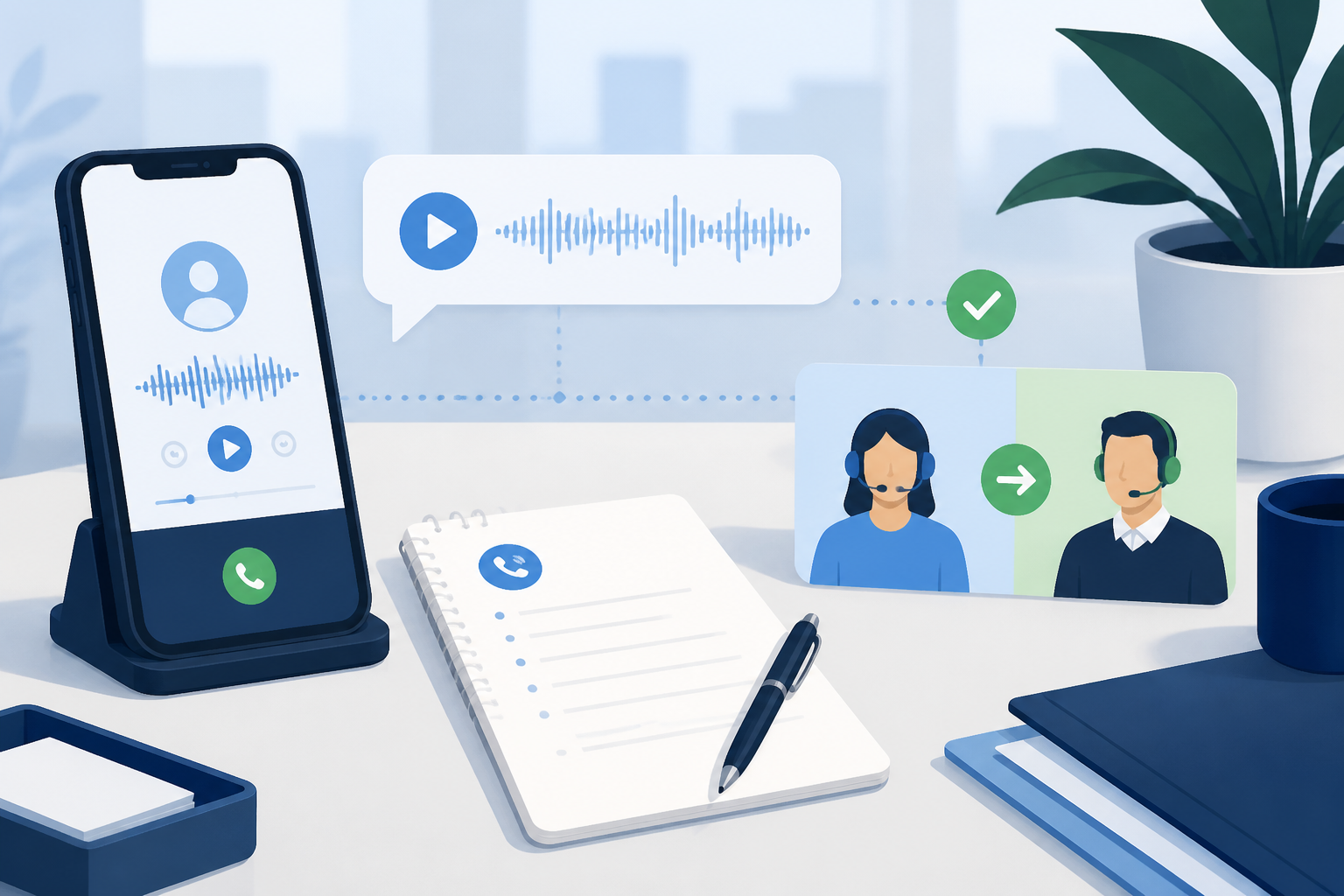
Study switching events separately. Identify why the first channel failed: invalid address, busy signal, no answer, full voicemail, bounced message, platform outage, unsafe recipient, or customer instruction. Each reason supports different next actions. No answer does not prove refusal, and a bounce does not authorize a call. Record the rule that permitted the next channel, the evidence checked immediately before use, and whether the content was reduced for that route. This makes switching a reviewable decision instead of an invisible retry tactic.
Method and review criteria
Message content must follow channel risk. A voicemail or shared email may need only the business name, neutral callback purpose, trusted number, and reference that reveals nothing sensitive. A connected call can still require identity checks before account detail. Text messages can appear on lock screens. The study should audit what was actually disclosed, not merely whether the route was allowed. Permission to use a channel does not automatically authorize every detail associated with the customer’s request.
Primary outcomes include preference provenance, channel-purpose match, pre-attempt suppression check, permitted switching rule, content minimization, stop propagation, owner receipt, and resolution. Secondary outcomes can include successful connection and elapsed time, but neither validates an unsupported attempt. Report customers, request lineages, and attempts as different denominators. One customer with five retries should not look like five independent opportunities, and a connected call after four inappropriate attempts should not be summarized as success without the preceding exposure.
Test revocation propagation across live systems. When a customer says “do not text me,” record the exact scope, time, caller action, source system, downstream queues, and acknowledgement. Observe whether scheduled messages, campaign lists, and manual notes reconcile before another attempt. If the person says “email me instead,” keep the text stop distinct from the email instruction. The caller can confirm the bounded wording released by the client; deciding legal effect across campaigns and affiliates belongs to qualified owners.
Authority and practical implications
Bias can enter through observability. Connected calls create richer notes than unanswered attempts, email delivery logs differ from human reading, and staff may document exceptions more carefully after a complaint. Keep failed and unknown outcomes in the cohort. Compare channels only after considering customer selection, request type, urgency, time of day, and data quality. This is an operational evidence study, not a randomized test that one channel produces better customer outcomes.
Households and shared workplaces complicate destination evidence. A number can reach several people, an email alias can be team-monitored, and a messaging account can remain signed in on multiple devices. The workflow should distinguish destination ownership, safe-message instruction, and identity confirmation during the interaction. Even when the customer supplied the route, callers should follow the released disclosure boundary. A successful callback to the device does not by itself prove the person answering may receive account details.
Time windows need a stated timezone and expiry. “Call after five” is incomplete when the customer, caller, and account owner operate in different places. Record the timezone if the customer supplies it or the approved system has an attributable source; otherwise route the ambiguity or use a conservative released window. Do not infer current location from a mobile number. When the preference expires after one case, close it with the request instead of silently converting it into a permanent profile rule.
Limitations, conclusion, and sources
Reconciliation should compare every active queue after a change. Sample CRM tasks, dialer lists, messaging schedules, help-desk automations, and manual owner notes using pseudonymous keys. Record propagation time and stale attempts, then distinguish system delay from caller noncompliance. A preference visible in one application but absent from the dialer is a workflow defect. Coaching a caller cannot fix it; the buyer needs an accountable synchronization rule, monitoring, and a safe pause when systems disagree.
A prelaunch simulation should exercise four paths: the requested channel works, the first channel fails, the customer changes preference, and a stop arrives while another attempt is scheduled. Reviewers verify the source, disclosure level, queue state, and owner receipt at every transition. Repeat the simulation after integrations or campaign rules change. This gives callers practice with the boundaries and reveals system races before a real customer receives an avoidable message.
The caller’s boundary is to check the current channel-purpose state, use a released route and script, apply the approved retry rule, preserve a new preference or stop, and send unresolved conflicts to the owner. Callers should not infer broad permission from urgency, prior purchases, a number on file, or success reaching the person elsewhere. They should not promise resolution merely because contact occurred. The client retains preference governance, campaign scope, legal interpretation, and the underlying service decision.
Limitations and non-claims. Channel permissions and legal requirements depend on purpose, relationship, technology, jurisdiction, and the exact communication. Delivery receipts do not prove reading, caller ID can be misunderstood, and people can share devices or accounts. The cohort may overrepresent customers who respond. This protocol is not legal advice, does not establish consent, and makes no claim about OutsourcedCallers.com results. It tests whether one workflow preserves source, scope, switching authority, and uncertainty.
Niche-specific conclusion. A buyer using Filipino callers for customer follow-up should release a channel-by-purpose matrix, source hierarchy, safe-message rules, retry limits, suppression sync, and named conflict owner. Review the complete attempt lineage rather than only the final connection. The best handoff shows why each route was used, what was disclosed, what the customer changed, and whether every queue honored it. That gives callers a clear service task while keeping permission policy and sensitive decisions with the client.
Sources: Complying with the Telemarketing Sales Rule | Federal Trade Commission | https://www.ftc.gov/business-guidance/resources/complying-telemarketing-sales-rule | checked 2026-10-05 || Unwanted Calls/Texts - Phone | Federal Communications Commission | https://consumercomplaints.fcc.gov/hc/en-us/articles/115002234203-Unwanted-Calls-Texts-Phone | checked 2026-10-05 || NIST Privacy Framework | National Institute of Standards and Technology | https://www.nist.gov/privacy-framework | checked 2026-10-05 || Protecting Personal Information: A Guide for Business | Federal Trade Commission | https://www.ftc.gov/business-guidance/resources/protecting-personal-information-guide-business | checked 2026-10-05 || Republic Act No. 10173: Data Privacy Act of 2012 | National Privacy Commission of the Philippines | https://privacy.gov.ph/data-privacy-act/ | checked 2026-10-05