
Philippines staffing research
What can a voicemail callback request actually prove for an outsourced calling team?
A research question about separating a callback invitation, a reachable person, and a customer-authorized next step in a Filipino calling queue.
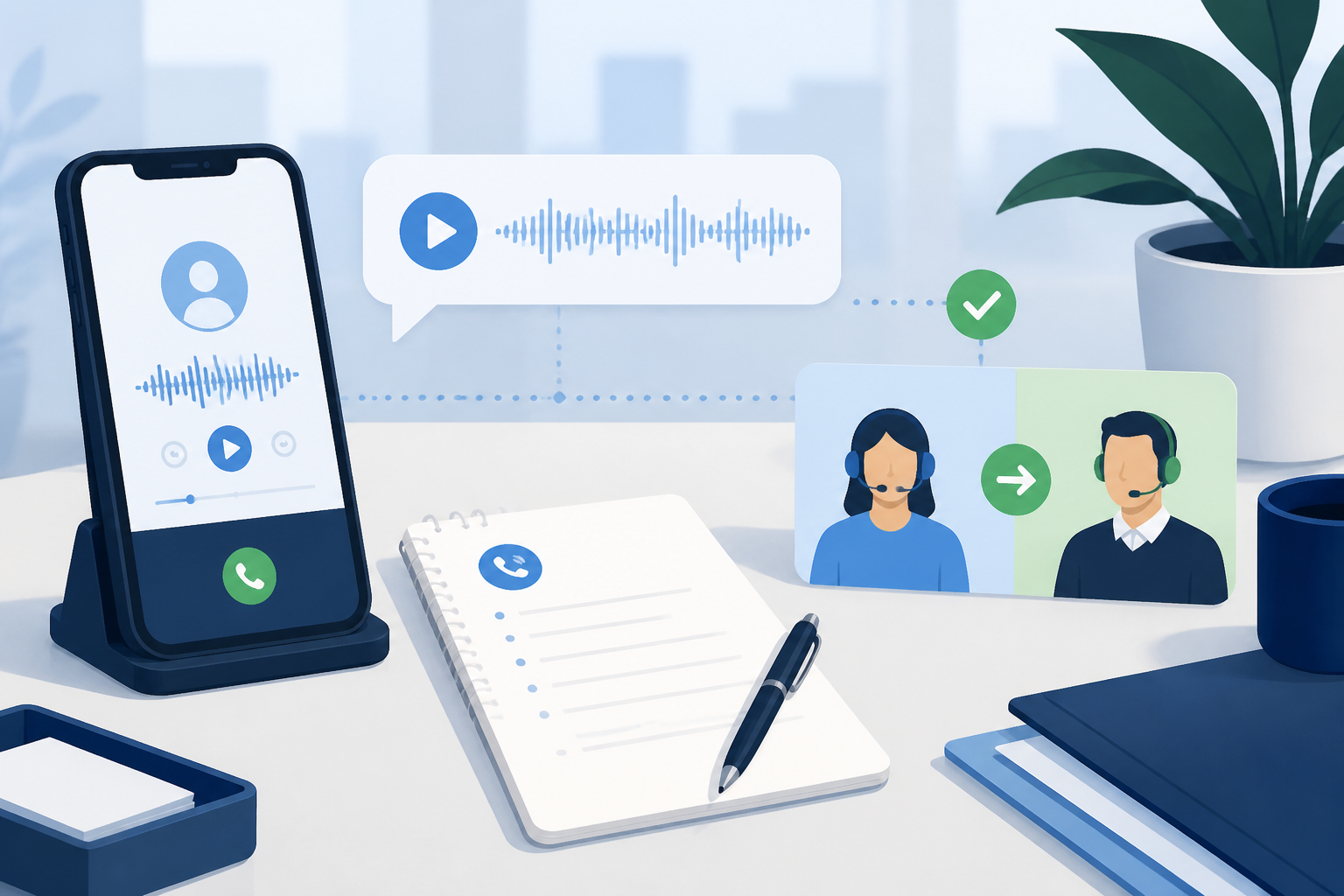
Published: August 20, 2026 (2026-08-20). Research question: when a Filipino caller leaves or receives a voicemail callback request, what evidence supports a next attempt, and what remains unknown? This matters to outsourced callers because a voice message can create activity without creating a conversation. The useful unit is not a voicemail count. It is a traceable relationship between the released purpose, the message or returned call, the person reached, the contact preference, and the owner-controlled result.
Methodology and evidence scope: this is desk research paired with a proposed review of dated call records, voicemail dispositions, returned-call identity states, suppression fields, and final queue outcomes. The external sources below provide calling, privacy, and customer-service principles; none measures OutsourcedCallers.com or establishes a benchmark for Filipino callers. The review should sample every voicemail state in a fixed period, then reconcile the source record to the next attempt rather than treating a message as permission.
A voicemail can establish that a message was attempted or delivered to a number, depending on the system evidence. It usually cannot establish that the intended person heard it, understood the purpose, accepted another call, or authorized disclosure to another household member. A returned call can establish contact with a voice, but it still requires the approved identity and purpose checks. The record should preserve these states separately: message left, message unavailable, returned call, intended person not verified, refusal, and substantive conversation.
The operating scenario is a follow-up queue where callers are tempted to mark a record “contacted” after leaving a short message. That label hides the decision the owner actually needs. If the queue exists to confirm a customer request, the caller may need an approved callback window and a complete response. If it exists to invite a meeting, the message may be only an invitation to reconnect. The brief should say which action is allowed and which outcome requires a live conversation.
Methodologically, begin with the cohort that was eligible for contact on the release date. Keep the released number, source purpose, contact preference, attempt timestamp, caller identity, message status, and next permitted action. Then inspect a sample of records marked voicemail and search for a subsequent return call or owner disposition. Do not silently remove numbers that were wrong, suppressed, or stale; they reveal whether the input list and the contact routine are aligned.
A useful measure is the share of voicemail records whose disposition matches the evidence actually available: message attempted, no message possible, returned contact not verified, verified conversation, explicit stop request, or owner review. A second measure can track whether the next action followed the approved waiting rule. These are process measures, not claims about customer interest. A high return rate cannot be inferred from a high voicemail count, and a low return rate does not by itself show caller failure.
The boundary is important: do not put account details, order facts, payment information, or sensitive reasons into an unverified voicemail. Do not describe a message as a scheduled callback unless the person agreed to that timing. Do not turn a callback request into consent for a different purpose. A Filipino caller can state the business name, approved general purpose, safe return route, and the instruction to use the published channel. The responsible owner defines what can be disclosed and what must wait for verification.
The handoff should identify the record, the date and time, the exact neutral message category, whether a callback was requested or merely invited, and the suppression or preference state. If the person returns the call, the note should say how the approved identity check was satisfied and whether the conversation stayed within the released purpose. A receiving owner should not have to guess whether the caller actually spoke with the named customer or only heard a message from an unknown speaker.
Quality review should compare the system event with the note and the next queue state. Look for false “contacted” labels, unnecessary disclosure, missing return instructions, repeated attempts after a stop request, and callbacks routed to the wrong owner. Reviewers should assess whether the note is faithful and bounded, not whether the caller managed to produce a positive outcome. If the same confusion recurs, repair the disposition vocabulary and the brief before increasing attempts.
For a Philippines-based calling service, the capability being tested is disciplined ambiguity handling. The caller must know when a message is enough to close a narrow task and when it is only an incomplete contact event. That is a role skill, not a nationality claim. Training can use paired examples: a voicemail invitation, a returned call from an unverified person, a verified customer with a new request, and a clear refusal. Each example should end with the owner route, not with a forced success label.
The practical comparison is between two records that both say “voicemail.” In the first, the caller used the approved general message, recorded that no person was reached, and set the next attempt according to the release rule. In the second, the caller named an account detail, assumed the person heard it, and scheduled another attempt after a household member returned the call. A reviewer should not treat these as equivalent. The first preserves a bounded event; the second creates disclosure and identity questions. This distinction is exactly why a research measure must inspect note content and not only disposition totals. It also gives the client a specific coaching target: protect the message boundary, keep unknowns visible, and route returned calls through the same verification standard as any other contact.
Limitations: voicemail technology varies, caller identification can be incomplete, household and shared numbers create identity risk, and contact rules differ by purpose and jurisdiction. This study cannot establish a universal waiting period, consent standard, or disclosure policy. It also cannot show whether a person heard a message without reliable evidence. Those choices belong in the client’s approved policy and should be stricter where the data or contact purpose requires it.
Sources: https://www.ftc.gov/business-guidance/advertising-marketing/telemarketing | https://www.fcc.gov/consumers/guides/stop-unwanted-robocalls-and-texts | https://www.nist.gov/privacy-framework | https://www.bls.gov/ooh/office-and-administrative-support/customer-service-representatives.htm
Conclusion: a voicemail callback request proves, at most, a bounded contact event until a later approved check establishes more. Outsourced callers should report messages, returned contacts, verified conversations, refusals, and owner decisions as different states. That evidence lets a client decide whether to wait, suppress, repair the record, or route the request without pretending a message was a conversation.